
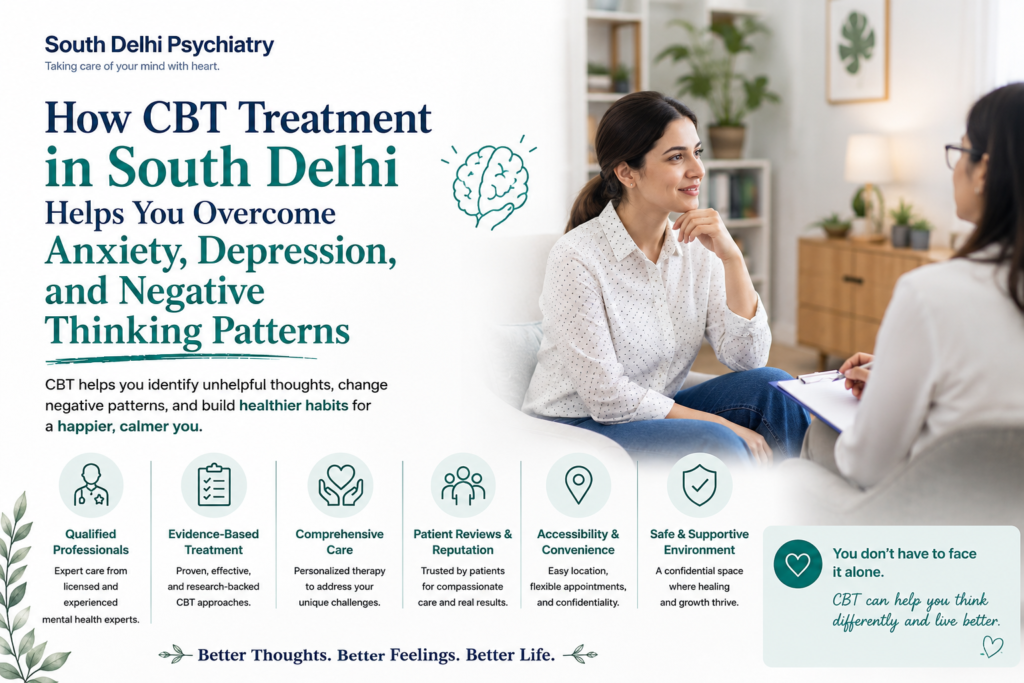
Mental health concerns such as anxiety, depression, and persistent negative thoughts are becoming increasingly common across all age groups. Work pressure, relationship stress, social expectations, and lifestyle imbalance often contribute to emotional distress that affects both personal and professional life. Fortunately, evidence-based therapies such as Cognitive Behavioural Therapy (CBT) are helping people regain emotional stability and healthier thinking habits.
Today, many individuals seeking structured mental health support are turning to CBT treatment in South Delhi because of its practical, goal-oriented, and scientifically supported approach. CBT focuses on identifying unhealthy thought patterns and replacing them with more balanced responses, helping patients develop long-term coping strategies.
How Modern CBT Treatment in South Delhi Supports Emotional Recovery and Healthier Thinking
CBT helps individuals recognise harmful thought patterns that influence emotions and behaviour. Through guided sessions, people learn practical coping methods to manage anxiety, reduce depressive symptoms, and improve emotional resilience. Structured CBT programmes also support healthier decision-making, emotional regulation, and long-term mental wellness.
Understanding the Core Principles of CBT
Cognitive Behavioural Therapy is based on the understanding that thoughts, emotions, and behaviours are interconnected. Negative thinking patterns often reinforce emotional distress, leading to cycles of anxiety, self-doubt, hopelessness, or social withdrawal.
CBT works by helping individuals identify distorted thinking styles, challenge irrational beliefs, and gradually replace them with realistic perspectives. Unlike open-ended counselling approaches, CBT is highly structured, action-focused, and designed to deliver measurable progress over time.
How CBT Helps Manage Anxiety Disorders
Anxiety can manifest through excessive worry, panic attacks, overthinking, irritability, sleep disturbance, or physical tension. CBT teaches individuals how to recognise triggers, understand behavioural responses, and reduce avoidance patterns that strengthen anxiety over time.
Therapists often use techniques such as cognitive restructuring, mindfulness-based exercises, behavioural activation, and exposure strategies to improve emotional control. Many people seeking guidance from a Psychiatrist in South Delhi are advised to combine therapy with lifestyle modifications for more sustainable outcomes.
Addressing Depression Through Behavioural Change
Depression often affects motivation, concentration, energy levels, and emotional balance. People experiencing depressive symptoms may struggle with feelings of worthlessness, social isolation, or persistent negativity.
CBT supports recovery by encouraging gradual behavioural changes and helping patients reframe self-critical thoughts. Structured therapy sessions also help individuals develop realistic goals, improve communication patterns, and rebuild confidence through consistent emotional support and practical coping techniques.
Breaking Negative Thinking Patterns
One of the most effective aspects of CBT is its ability to interrupt repetitive negative thinking cycles. Catastrophic assumptions, self-blame, fear of failure, and overgeneralisation are common cognitive distortions that contribute to emotional distress.
Therapists guide individuals in recognising these patterns and replacing them with evidence-based thinking approaches. Over time, patients learn healthier emotional responses, improved stress management, and greater self-awareness. This practical framework makes CBT highly effective for long-term emotional resilience.
Why Professional Guidance Matters
Effective CBT requires personalised assessment, clinical expertise, and consistent therapeutic support. Treatment plans are typically tailored according to the severity of symptoms, behavioural patterns, and personal circumstances.
Choosing the best psychiatrist in South Delhi or an experienced CBT practitioner ensures access to structured care, ethical treatment methods, and evidence-based interventions aligned with modern psychiatric standards. Professional support also helps individuals track progress and maintain accountability throughout the recovery process.
Wrapping Up
Mental health recovery is not about eliminating emotions but learning healthier ways to understand and manage them. CBT continues to be one of the most trusted therapeutic approaches for anxiety, depression, and negative thought patterns because of its structured, research-backed methodology. For individuals seeking reliable mental healthcare and professional therapeutic guidance, South Delhi Psychiatry offers expert-led support tailored to modern mental wellness needs, including effective CBT treatment in South Delhi.
FAQs
1. What conditions can CBT effectively treat?
CBT is widely used to treat anxiety disorders, depression, stress-related conditions, panic attacks, phobias, and negative thinking patterns. It also supports emotional regulation and behavioural improvement. Many individuals seeking CBT treatment in South Delhi choose this therapy because it provides structured coping techniques and measurable long-term psychological benefits.
2. How long does CBT usually take to show results?
The duration varies depending on the individual’s condition, symptom severity, and therapy consistency. Some people notice improvements within a few weeks, while others may require longer-term sessions. CBT is designed to create gradual behavioural and cognitive changes that support sustainable emotional improvement and healthier daily functioning over time.
3. Should CBT be combined with psychiatric treatment?
In many cases, CBT works effectively alongside psychiatric care, especially for moderate or severe anxiety and depression. A qualified Psychiatrist in South Delhi may recommend therapy combined with medication, lifestyle adjustments, and stress management techniques to create a more balanced and personalised treatment approach for mental health recovery.
4. How does CBT help change negative thinking patterns?
CBT teaches individuals to identify irrational beliefs, challenge distorted assumptions, and replace harmful thought cycles with realistic interpretations. Through guided exercises and structured sessions, patients gradually improve emotional awareness and behavioural responses. This process helps reduce emotional distress while encouraging healthier coping mechanisms in daily situations.
5. How do I choose the right mental health professional for CBT?
Look for qualifications, clinical experience, patient-centred care, ethical practices, and evidence-based treatment methods when selecting a therapist. Many people prefer consulting the best psychiatrist in South Delhi or experienced CBT specialists who offer personalised treatment plans, clear communication, and structured therapeutic guidance tailored to individual emotional and behavioural needs.