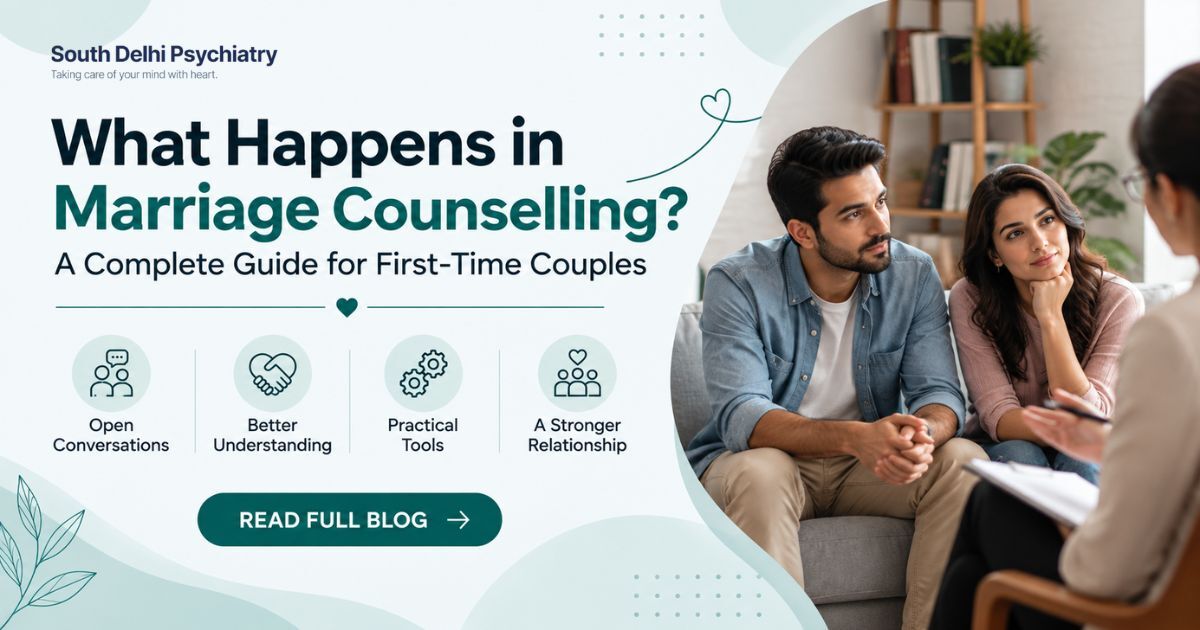
Most couples booking their first session carry the same quiet fear. They’ll walk in, and someone will decide who’s to blame. That isn’t how it works. Marriage counselling is a structured, confidential space where two people, guided by a trained professional, learn to talk about the things they’ve stopped being able to discuss at home.
Here’s how it unfolds, session by session.
Forget the Movie Version: What You're Really Walking Into
Plenty of people picture marriage counselling as a last resort, something you try once the separation talk has already started. In reality, couples come in for all sorts of reasons. Recurring arguments that never resolve. A breach of trust. The strain of a new baby, ageing parents or money worries. Sometimes it’s simply the feeling that you’ve drifted into living like flatmates.
Another worry is that the counsellor will pick a side. They won’t. Their client is the relationship, not either one of you, and a good counsellor stays neutral even when one partner arrives far more frustrated than the other.
Your First Hour in the Room
Getting to Know You Both
The opening session is mostly listening. You’ll be asked how you met, what brought you in now and what each of you hopes will change. Expect questions about your families, your daily routines and how arguments usually play out at home.
Some of it feels surprisingly ordinary. That’s deliberate. Everyday patterns are where the friction tends to live.
Ground Rules and Confidentiality
Your counsellor will explain how sessions run, how often you’ll meet and what stays private. Some prefer to see each partner once on their own. If so, they’ll be clear about how anything shared individually is handled, so nobody feels ambushed later.
Agreeing on What “Better” Looks Like
By the end, you should both have a rough sense of the goal. “Fewer arguments” is a start. “Talking about money without it turning into a row” is better, because you’ll both notice when it’s actually happening.
How Marriage Counselling Unfolds After Week One
Later sessions get more focused. Your counsellor will point out patterns as they happen in the room, like one partner pushing for a conversation while the other shuts down. You’ll practise listening without silently preparing your defence. And you’ll learn to say what you need without it landing as an accusation.
Expect homework. It might be a short weekly check-in, noticing one thing your partner did well each day, or agreeing to pause a heated discussion and return to it later. The real change happens between sessions, in your kitchen and your car.
Progress won’t move in a straight line. A good week can be followed by a rough one, and bringing that rough week back to the next session is where some of the most useful work gets done.
When One of You Needs More Than Couples Work
Sometimes the counsellor notices that one partner is carrying something bigger than the relationship, such as anxiety, low mood, grief or a difficult relationship with alcohol. Getting support from a mental health care clinic that offers couples sessions and individual care under one roof makes this far easier. A referral doesn’t mean retelling your story to strangers.
Picking a Counsellor You'll Keep Seeing
Practical details matter more than couples expect. Seeing a psychologist near you makes it easier to keep turning up when work runs late or one of you is exhausted. Beyond location, look for training in couples work, a clear explanation of confidentiality and a first meeting where you both feel heard.
If either of you leaves feeling judged, say so. A good therapist will adjust.
The Hardest Part Is Booking the First Session
You don’t need to agree on everything before you start. You don’t even need to know whether the relationship will last. Marriage counselling works best when both partners turn up willing to be honest, even when that honesty feels uncomfortable.
If you’re in South Delhi and ready to talk, South Delhi Psychiatry offers a calm, confidential setting to begin. Book your first session and take it one conversation at a time.
FAQs :
1. How many sessions of marriage counselling will we need?
There’s no fixed number. Some couples notice a real shift within a few months of regular sessions, while longer-standing issues take more time. Your counsellor will review progress with you both regularly and agree together when you’re ready to finish.
2. What if my partner refuses to come?
You can still start on your own. Individual sessions help you understand your own part in recurring conflicts and how to respond differently. Many partners become more open to joining once they see that the process isn’t about assigning blame.
3. Is everything we say kept confidential?
Yes, with limited exceptions. Counsellors keep sessions private unless there’s a serious risk of harm to someone. Your counsellor should explain these boundaries clearly in the very first session, so you both know exactly where you stand before opening up.
4. Should we wait until things get really bad?
No. Couples who come in early have more goodwill left to work with, which makes real change easier. If the same argument keeps coming back or you feel increasingly distant, that’s already reason enough to book a first session together.
5. Will the counsellor tell us whether to separate?
No. A counsellor won’t make that decision for you. Their role is to help you both communicate more clearly and understand what’s happening, so that whatever you decide, together or apart, comes from honest conversation rather than exhaustion or anger.