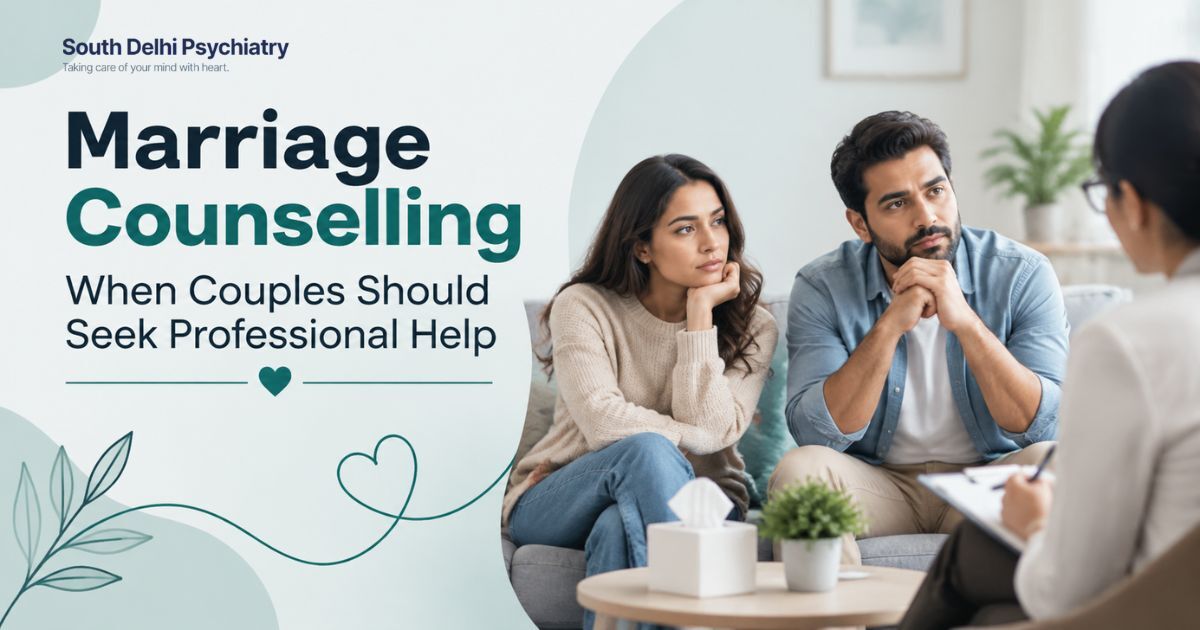
Most couples don’t book marriage counselling because of one bad fight. They book it after months of the same fight, repeated in slightly different words, until both people are tired of hearing themselves. By then, the problem isn’t the argument. It’s the pattern underneath it.
The honest answer to “when should we go?” is earlier than most people think. This guide covers the signs worth taking seriously, the doubts that keep couples away, and what support in South Delhi actually looks like.
The Myth of the "Last Resort"
Plenty of couples treat marriage counselling as the final step before separation. That belief costs them time. A therapist can do far more with two people who are frustrated but still invested than with two people who have already checked out emotionally.
Think of it like a knee injury. Physiotherapy after the first twinge is simple. After a year of limping, it’s rehabilitation.
Signs Your Relationship Needs a Third Chair in the Room
Certain patterns show up again and again in couples who benefit from professional support:
- The same argument keeps returning, with no resolution
- One or both of you has stopped raising issues because “what’s the point?”
- Conversations about money, in-laws or parenting turn into blame within minutes
- Trust has been damaged through an affair, hidden spending or broken promises
- You feel more like flatmates running a household than partners
- A major change, such as a new baby, a job loss or a move, has shifted the balance between you
None of these means the marriage is failing. They mean the tools you’ve been using have stopped working.
In many Delhi households, there’s an added layer. Joint families, strong opinions from parents and the pressure to keep problems private can make talking to an outsider feel like betrayal. It isn’t. Counselling gives you a confidential space where neither partner has to perform for relatives, and both can say what they actually feel.
What Marriage Counselling Really Looks Like
The first marriage counselling session is mostly listening. A therapist asks each of you how you see the problem, what you’ve already tried and what you want from the relationship. Some sessions happen together, and a partner may be seen individually for part of the time.
You won’t be told who’s right. The work is about understanding how you both react under pressure, then practising different responses. Many couples notice small changes first, like calmer conversations about chores or fewer late-night standoffs, before the bigger issues ease.
When One Partner Isn't Ready
It’s common for one person to be keener than the other. Starting alone still helps. Individual counselling changes how you respond to conflict, which changes the dynamic at home, and plenty of hesitant partners join once the process feels less threatening.
When It's More Than a Relationship Problem
Sometimes the strain in a marriage connects to something else. Untreated anxiety, depression, ADHD or past trauma in one partner can surface as irritability, withdrawal or constant misunderstandings. Working only on the relationship leaves the root untouched.
This is where combined psychology services and psychiatric care make a real difference. At South Delhi Psychiatry in Safdarjung Enclave, the mental health team includes psychiatrists and clinical psychologists, so an individual concern feeding the conflict can be assessed and treated alongside couples work rather than referred elsewhere.
Your Next Conversation Doesn't Have to Be an Argument
If you recognised your own relationship somewhere in this piece, that recognition is worth acting on. Marriage counselling works best when couples arrive curious rather than exhausted, and there’s no need to wait for a crisis.
South Delhi Psychiatry offers in-person consultations at its clinic opposite Deer Park, along with online sessions for couples who find travel difficult or prefer the privacy of home. Book an appointment through the website or message the team on WhatsApp to take the first step together.
FAQs :
How do we know if we need marriage counselling?
If the same conflicts keep repeating, communication has shut down or trust has been damaged, it’s worth booking a session. You don’t need to wait for a crisis. Early support is easier and usually shorter than waiting until resentment has built up.
Can I attend counselling without my spouse?
Yes. Individual sessions help you understand your own reactions and communicate more calmly. That alone changes how conflicts play out at home. Many reluctant partners feel far more comfortable joining later, once they see the process isn’t about assigning blame.
Is marriage counselling confidential?
Yes. What you share stays between you, your partner and the therapist. Clinicians follow professional confidentiality standards, with narrow exceptions only where someone’s safety is at serious risk. Your wider family doesn’t need to know you’re attending sessions at all.
Are online sessions available?
Yes. South Delhi Psychiatry offers online consultations alongside in-person appointments at Safdarjung Enclave. Online sessions suit couples with long commutes or demanding work schedules, those living elsewhere in Delhi NCR, or anyone who feels more at ease speaking from home.
What if one of us is dealing with anxiety or depression?
That’s common, and it matters more than most couples realise. The clinic’s psychology services and psychiatric care allow individual concerns to be assessed and treated alongside couples work, so the relationship and the underlying condition both receive attention at the same time.