Feeling nervous before a big day? Completely normal. But when fear takes over and won’t let go, it starts eating into sleep, work, and even the relationships you care about. Telling anxiety and panic apart isn’t always easy, yet it’s often the first real step toward knowing when to bring in professional help. For anxiety treatment South Delhi, understanding this distinction is a genuinely useful place to start.
What Is Anxiety?
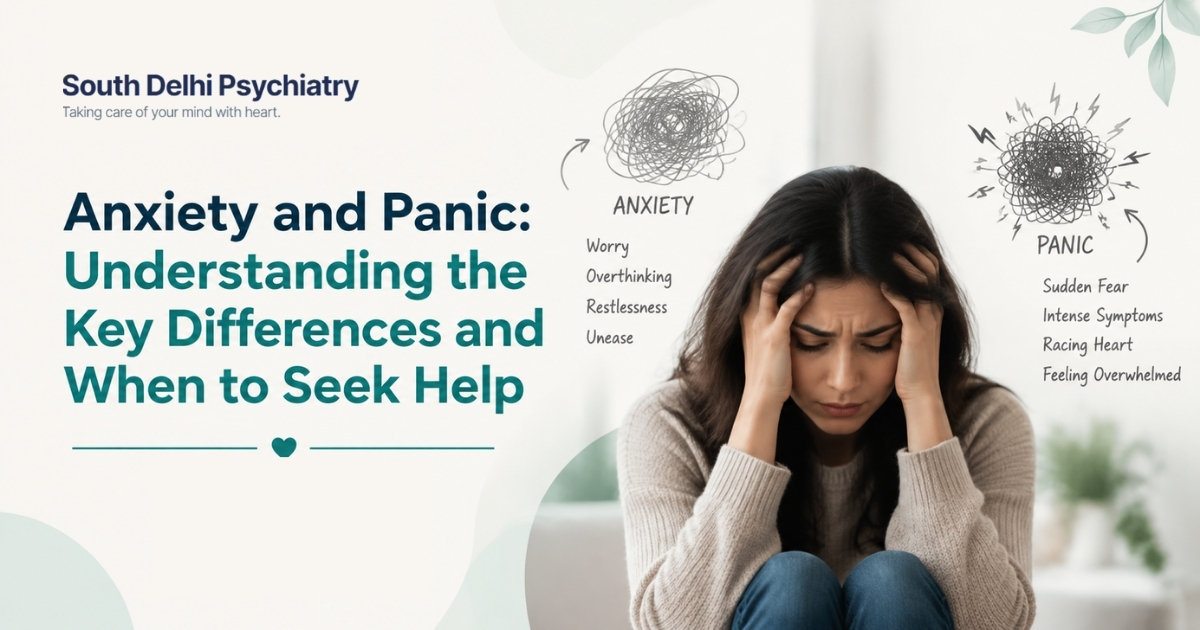
Anxiety usually shows up as worry. That nagging sense that something’s about to go wrong, even before anything has. Anyone exploring anxiety treatment South Delhi will probably recognise this pattern. It builds slowly, and it sticks around far longer than it should. Overthinking. Restlessness. Trouble focusing. Add in tense muscles, sweating, a racing heart, or nights that never quite settle, and you’ve got a fairly typical anxious stretch.
What Is a Panic Attack?
A panic attack works differently. It hits fast, an intense wave of fear or discomfort that peaks within minutes, sometimes without warning at all. The signs vary: pounding heart, shortness of breath, shaking, dizziness, a tight chest, sweating, nausea, or that frightening sense of losing control altogether. It’s genuinely scary in the moment. And any symptom that’s new, severe, or hard to explain needs a proper medical check, not guesswork.
Anxiety vs Panic: What Is the Key Difference?
So what actually separates the two? Pattern and intensity, mostly. Anxiety tends to grow out of ongoing worries, shifting as circumstances change. Panic feels more like a sudden alarm, one that can go off with no obvious trigger at all.
Repeated panic attacks often push someone toward avoidance. Skipping travel plans. Turning down invitations. Steering clear of crowded places, simply because another episode feels possible at any moment. Once that pattern settles in and starts shrinking someone’s world, it may point toward something more specific: panic disorder.
When Is Panic Disorder Treatment Needed?
One panic attack doesn’t automatically mean panic disorder. Not even close. A proper assessment starts to matter once the attacks keep returning. Once the fear of the next one starts running your thinking. Once you’re rearranging your routine just to dodge certain situations.
Panic disorder treatment might mean therapy. It might mean medication. Sometimes it’s a mix of both, alongside lifestyle changes, depending entirely on what a proper clinical evaluation actually turns up.
When Should You Consider Psychiatric Treatment?
There’s no rule saying you have to wait until things become unbearable. Support is worth considering the moment anxiety or panic starts pulling at work, studies, sleep, or the people who matter to you.
Psychiatric treatment usually begins with a conversation. One that looks closely at symptoms, history, triggers, general wellbeing. From there, a psychiatrist might suggest medication, therapy, or working alongside another mental health professional, and for a lot of people, this is exactly where the search for anxiety treatment South Delhi actually begins.
Simple Steps While You Seek Support
A regular sleep routine helps. So does eating consistently, cutting back on caffeine, and staying away from alcohol as a way to cope. During an actual panic episode, slow breathing and simple grounding techniques often bring someone back to the present moment.
None of this replaces a proper assessment. It just makes the waiting a bit more bearable.
When Is It Time to Seek Urgent Help?
Get medical help immediately for severe or new chest pain, serious breathing trouble, fainting, confusion, or anything that feels like an emergency. Mental health crises deserve the same urgency, especially where thoughts of self-harm or safety concerns are involved.
Waiting too long only lets symptoms grow more limiting than they need to be. Anyone weighing up anxiety treatment in South Delhi should know that a qualified professional can help make sense of what’s actually happening, and what kind of care genuinely fits.
Conclusion
Anxiety and panic overlap more than people expect, yet they play out quite differently. One sits with you as an ongoing worry. The other lands as a sudden, physical surge of fear that’s hard to predict. Either way, once it starts disrupting daily life, reaching out for help makes sense.
For anxiety treatment South Delhi, South Delhi Psychiatry can help you make sense of what you’re going through and point you toward the right kind of care. Book a consultation, and take that next step toward a plan built around what you actually need.
FAQs
1. What's the real difference between anxiety and a panic attack?
Anxiety tends to be an ongoing worry about things that might happen. A panic attack shows up suddenly, hitting with intense fear almost out of nowhere. Both come with physical symptoms, though timing and triggers can look quite different from person to person.
2. When should someone seek help for anxiety?
If anxiety or panic keeps disrupting sleep, work, relationships, or everyday routines, it’s worth getting checked out. Frequent episodes, growing avoidance, or just struggling to manage things alone are all fair signals that professional input could genuinely help.
3. What does panic disorder treatment usually involve?
Panic disorder treatment often combines psychotherapy with medication, though the exact mix really depends on the person. A psychiatrist looks at recurring attacks and underlying triggers first, before recommending anything, so nobody’s left to self-diagnose or manage things solo.
4. When does psychiatric treatment make sense for anxiety?
Psychiatric treatment becomes relevant once anxiety turns persistent, severe, or genuinely disruptive. A psychiatrist weighs up symptoms, history, physical health, and daily functioning before suggesting a path forward, whether that’s medication, therapy, or a bit of both.
5. How do you choose the right anxiety care in South Delhi?
For anxiety treatment South Delhi, look for a professional who runs a proper assessment, explains the options clearly, and actually follows up afterwards. Location matters, sure, but clinical expertise, confidentiality, and how comfortable you feel with them matter just as much.