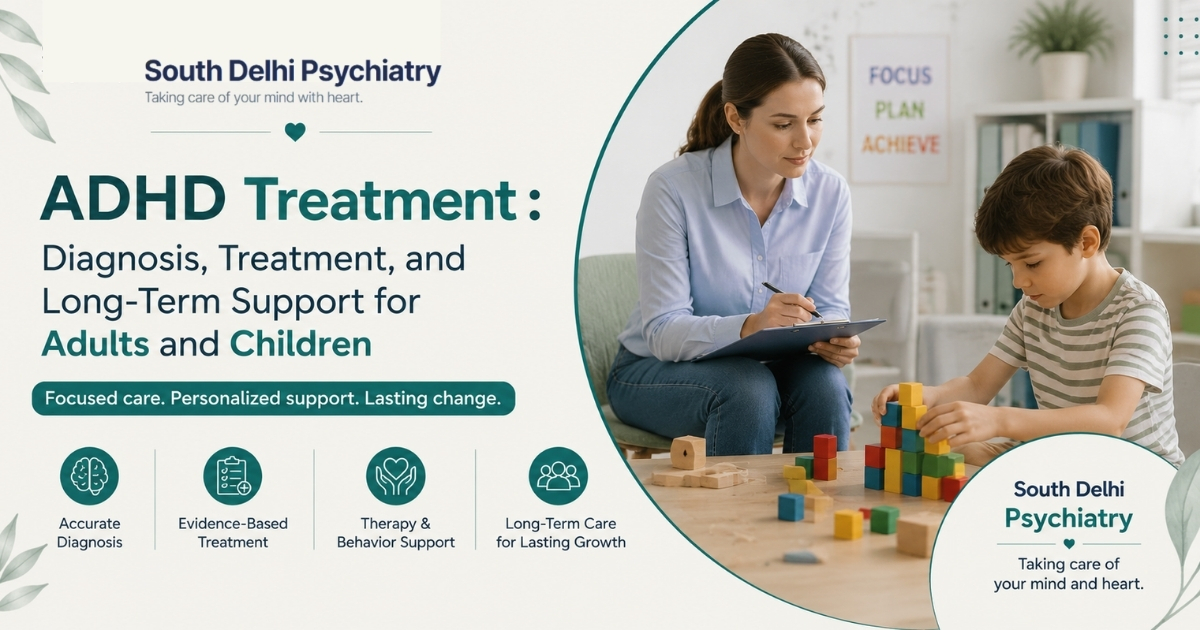
Attention-deficit/hyperactivity disorder (ADHD) is a neurodevelopmental condition that can affect attention, impulse control, activity levels and everyday functioning. It can occur in both children and adults, although symptoms may look different at different stages of life.
Seeking timely ADHD treatment South Delhi can help individuals understand their symptoms and develop practical strategies for managing challenges at school, work, home and in relationships.
How ADHD Treatment in South Delhi Supports Accurate Diagnosis and Long-Term Management
ADHD treatment begins with a comprehensive assessment rather than a single test. A clinician considers symptoms, their duration, impact across settings, developmental history and other possible explanations before recommending an individualised treatment plan.
Understanding ADHD Diagnosis
There is no single blood test or scan that confirms ADHD. Diagnosis generally involves a detailed clinical assessment and information about symptoms and functioning in different settings.
For children, parents, teachers and caregivers may provide valuable observations. For adults, the assessment may explore childhood symptoms, education, employment, relationships and daily responsibilities. A psychiatrist in South Delhi can also evaluate whether anxiety, depression, sleep difficulties or other conditions may be contributing to similar symptoms.
Treatment Options for Children and Adults
Treatment is tailored to the person’s age, symptoms, needs and circumstances. Depending on the assessment, it may include medication, behavioural interventions, psychotherapy, psychoeducation or a combination of approaches.
For children, parent-focused strategies and support at school can be important. Adults may benefit from approaches that address organisation, time management, emotional regulation and workplace functioning.
Medication should only be used under appropriate medical supervision, with benefits and potential side effects reviewed regularly.
Why Ongoing Support Matters
ADHD management does not necessarily end after diagnosis or the start of treatment. Symptoms and circumstances can change as children grow or adults move through different stages of life.
Regular follow-ups allow clinicians to review progress, adjust treatment when necessary and address emerging concerns. Family involvement, healthy routines, adequate sleep, physical activity and practical organisational strategies can complement professional care.
Choosing Appropriate Mental Healthcare
When considering ADHD treatment South Delhi, look for a service that provides thorough assessment and personalised follow-up rather than relying on a one-size-fits-all approach.
A mental healthcare clinic should provide a comfortable environment where patients and families can discuss concerns openly. Early professional guidance can also help distinguish ADHD from other conditions that may present with overlapping symptoms.
Final Thoughts
Effective ADHD treatment South Delhi begins with accurate assessment and continues through personalised, ongoing support. Whether the individual is a child struggling at school or an adult facing difficulties with work and relationships, professional guidance can help identify appropriate treatment options.
South Delhi Psychiatry provides psychiatric care focused on assessment, treatment planning and continuing mental-health support for individuals and families.
FAQs :
1. Can ADHD be diagnosed in adults?
Yes. ADHD can be diagnosed in adults when symptoms begin in childhood, continue over time and affect daily functioning. A qualified psychiatrist in South Delhi can assess symptoms, developmental history and other conditions that may cause similar difficulties.
2. What does ADHD treatment involve for children?
Treatment depends on the child’s age, symptoms and needs. It may include behavioural strategies, parent training, school support and, when appropriate, medication. Regular follow-ups help monitor progress and ensure the treatment approach remains suitable.
3. Is medication always necessary for ADHD?
No. Medication is not necessary for everyone. Treatment depends on symptom severity, individual needs and clinical assessment. Some people benefit from behavioural strategies or psychological support, while others may need medication as part of a professionally supervised treatment plan.
4. How long does ADHD treatment take to work?
There is no fixed timeline. Some people notice improvements relatively quickly, while others need treatment adjustments and ongoing support. ADHD treatment South Delhi should be reviewed regularly so the clinician can monitor progress and make changes when needed.
5. Can ADHD symptoms change with age?
Yes. ADHD symptoms can change throughout life. Hyperactivity may become less noticeable, while attention, organisation or impulsivity difficulties may continue. Regular clinical reviews can help ensure treatment and practical support remain appropriate as responsibilities and circumstances change.