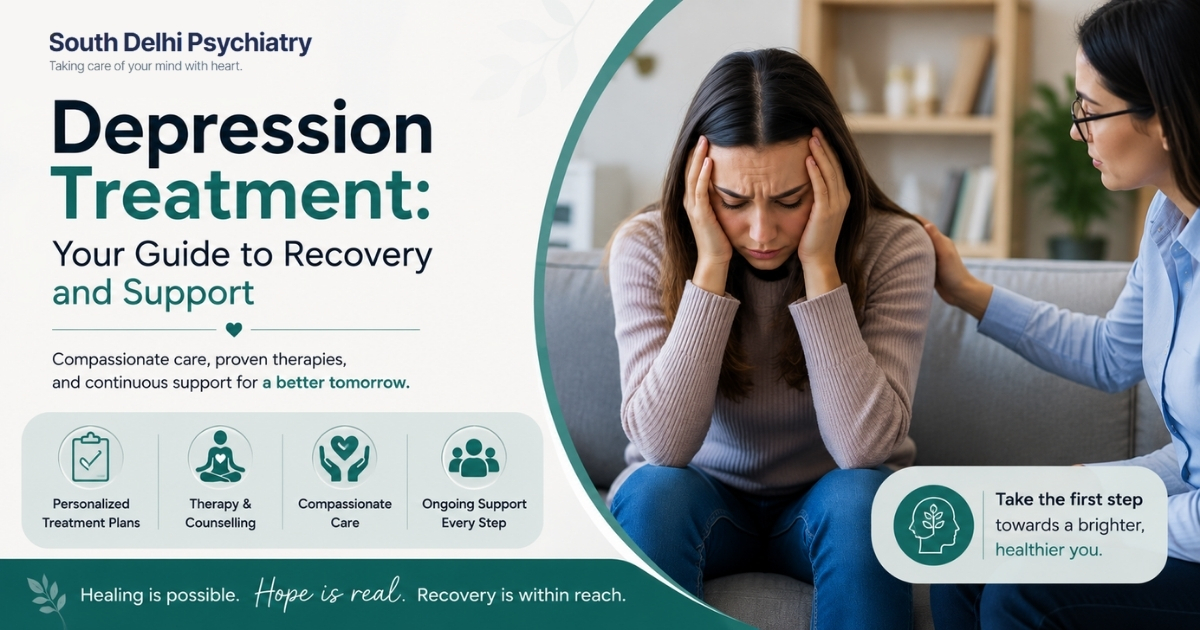
Living with depression can make ordinary things feel unexpectedly difficult. Getting out of bed, going to work, meeting friends or even enjoying something you once loved may start feeling like a task. It is not simply having a bad day. Depression can affect your mood, thoughts, sleep, energy and daily functioning.
The good news is that depression can be treated. Depression treatment in South Delhi can include professional assessment, therapy, medication or a combination of approaches, depending on the person’s symptoms and needs. Getting the right support early can make the path towards recovery easier to manage.
What Does Depression Treatment in South Delhi Involve?
There isn’t one treatment that works for everyone. A mental health professional first needs to understand what you’re experiencing, how long the symptoms have been present and how they are affecting your everyday life. Your sleep, appetite, concentration, relationships and work routine may also be discussed.
Based on this assessment, your doctor may recommend psychotherapy, medication or both. The treatment plan can then be adjusted as your symptoms and needs change. This personalised approach is an important part of effective depression treatment in South Delhi.
Recognising When You May Need Help
Depression doesn’t always look the same. You might feel persistently sad, emotionally numb, exhausted or unusually irritable. Some people lose interest in activities they previously enjoyed. Others struggle mainly with sleep, concentration or motivation.
You don’t need to wait until your symptoms become overwhelming before asking for help. If low mood continues for several weeks or starts affecting work, relationships, self-care or everyday responsibilities, speaking with a mental health professional can be a sensible next step.
Depression Treatment: Why Professional Assessment Matters
It can be tempting to search online for quick solutions or try to manage everything alone. That may not address what’s actually happening. A professional assessment can help distinguish depression from other conditions that may produce similar symptoms. It also allows you to discuss factors such as stress, grief, physical health, medication, lifestyle and previous mental health experiences.
Once the underlying picture is clearer, depression treatment can be planned around your individual situation rather than a generic checklist.
Therapy as Part of Recovery
Talking therapy can give you a safe place to understand difficult thoughts and emotions. Depending on your needs, therapy may explore negative thought patterns, emotional responses, relationships, stress and coping strategies. Cognitive Behavioural Therapy, interpersonal approaches and other forms of psychotherapy may be considered by a qualified professional.
Therapy is not simply about talking about problems. It can also help you develop practical ways of responding to difficult situations and recognise patterns that may be keeping you stuck.
When Medication May Be Considered
For some people, medication may form part of their treatment plan. Antidepressants are prescribed by qualified medical professionals when appropriate. The choice of medication depends on several factors, including symptoms, previous treatment, other medicines and individual health considerations.
Medication should only be taken under medical supervision. It may also take time to find the most suitable medicine and dosage. If medication is recommended, your doctor should explain how it works, what to expect and when follow-up is needed.
Depression Treatment Near You: Choosing the Right Support
When people search for depression treatment near you, convenience is usually one of the first things they consider. That’s understandable. Regular appointments become easier when the clinic is accessible.
But location shouldn’t be the only factor. Look at the professional’s qualifications, areas of experience, treatment approach and whether you feel comfortable speaking openly with them. A good therapeutic relationship can make it easier to discuss thoughts and feelings honestly. You should also feel able to ask questions about your treatment instead of feeling rushed into a decision.
Small Changes Can Support Your Recovery
Professional treatment is important, but everyday habits can also support your wellbeing. Try to maintain a regular sleep schedule. Eat consistently. Get some movement into your day, even if it’s only a short walk. Stay connected with people you trust.
Don’t expect yourself to change everything at once. When you’re dealing with depression, even small steps can require effort. Focus on manageable routines rather than setting unrealistic goals that leave you feeling worse when you cannot maintain them.
Recovery Doesn't Always Happen in a Straight Line
Some days may feel better than others. That doesn’t necessarily mean your treatment isn’t working. Recovery can involve progress, difficult periods and adjustments along the way. What matters is continuing to communicate with your mental health professional about changes in your symptoms.
If a particular treatment doesn’t seem to be helping, tell your doctor or therapist. Depression treatment can often be reviewed and modified rather than simply abandoned.
When Should You Seek Urgent Help?
If depression becomes severe and you have thoughts of harming yourself, feel unable to stay safe or believe you may act on suicidal thoughts, seek urgent professional help immediately and tell someone you trust.
You don’t have to manage a mental health crisis alone. For less urgent concerns, arranging an appointment with a qualified mental health professional can be a useful first step towards understanding what you’re experiencing.
Conclusion
Finding suitable depression treatment in South Delhi is about more than choosing the nearest clinic. It starts with understanding your symptoms and finding professional support that matches your individual needs. Therapy, medication, lifestyle changes or a combination of approaches may all have a place in recovery. Most importantly, you don’t have to figure everything out on your own. South Delhi Psychiatry provides mental health support with an emphasis on assessment, personalised treatment and ongoing care, helping individuals take practical steps towards better emotional wellbeing.
FAQs
1. When should I consider depression treatment in South Delhi?
You may want to consider depression treatment in South Delhi if persistent sadness, loss of interest, tiredness, sleep changes, poor concentration or feelings of hopelessness are affecting your daily life. You don’t need to wait until symptoms become severe. Speaking with a qualified professional can help you understand what you’re experiencing.
2. What happens during depression treatment?
Depression treatment usually begins with an assessment of your symptoms, history and everyday functioning. Depending on your needs, a professional may recommend psychotherapy, medication or both. Treatment is monitored over time, and the approach can be adjusted if your symptoms change or the initial plan isn’t providing enough benefit.
3. How do I find suitable depression treatment near you?
When searching for depression treatment near you, consider more than distance. Check the professional’s qualifications, experience, treatment methods and availability. You should also feel comfortable discussing personal concerns openly. Accessibility matters because regular appointments can be easier to maintain when the clinic is convenient for your daily routine.
4. Can therapy alone help with depression?
Therapy can be helpful for many people with depression, particularly when treatment focuses on thoughts, emotions, behaviour and coping patterns. However, the most suitable approach varies. Some people may benefit from therapy alone, while others may require medication or combined care. A qualified professional can recommend an approach based on individual needs.
5. How long does depression treatment take?
There is no fixed treatment duration because depression affects people differently. Some individuals notice improvements within weeks, while others need longer-term support. Factors such as symptom severity, treatment type, personal circumstances and response to treatment all matter. Regular follow-up allows the professional to assess progress and make appropriate changes.