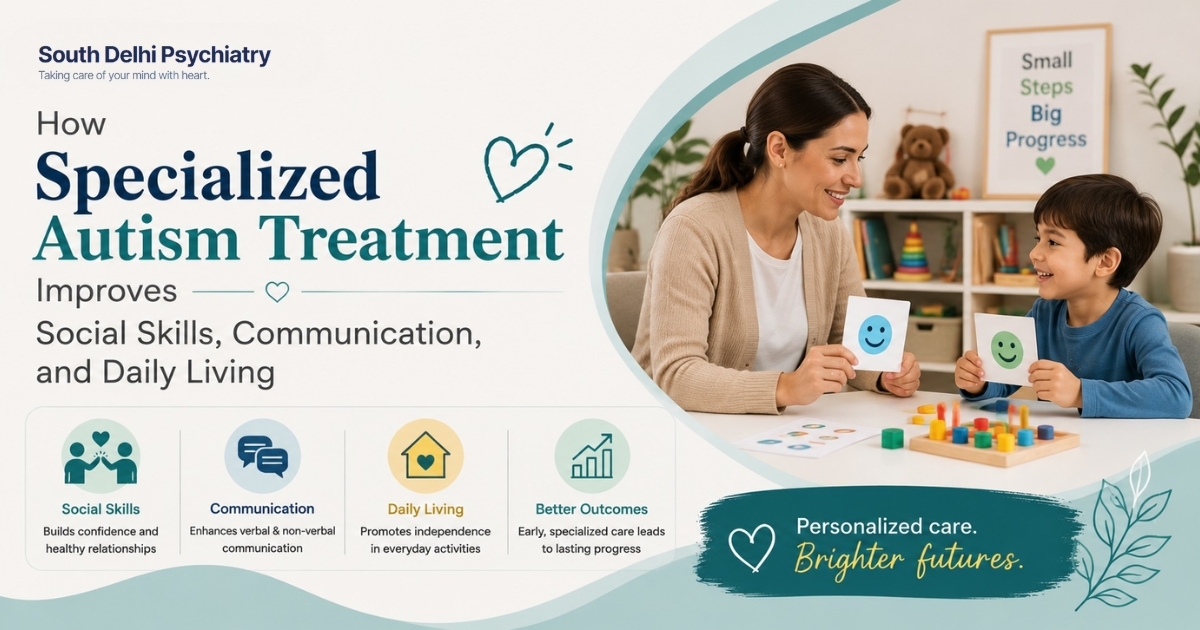
Autism spectrum disorder affects communication, behaviour, social interaction and daily functioning in different ways for every individual. Early diagnosis and structured intervention can significantly improve developmental outcomes and quality of life. Today, specialised Autism treatment focuses on personalised care plans that support children and adults in building practical communication, emotional and behavioural skills.
Modern therapeutic approaches are designed to encourage independence while helping individuals participate more confidently in social, academic and everyday environments. With increasing awareness and evidence-based therapies, families now have access to more targeted developmental support than ever before.
How Autism Treatment Supports Communication and Daily Functioning Development
Specialised Autism treatment helps individuals improve communication, emotional regulation, social interaction and daily living skills through structured and personalised interventions. Therapy programmes focus on strengthening behavioural responses, adaptive learning and independent functioning while supporting long-term developmental progress across different age groups. Early and consistent intervention often improves social participation, learning outcomes and overall quality of life.
The Importance of Individualised Therapy Approaches
Autism affects each person differently, which makes personalised treatment planning essential. Specialists assess communication patterns, sensory responses, behavioural challenges and learning abilities before recommending suitable interventions.
Many structured autism therapy programmes combine speech therapy, occupational therapy, behavioural support and social skill development. These integrated approaches help individuals strengthen communication abilities while improving focus, emotional understanding and adaptive behaviour.
Therapists often involve families closely in the treatment process because consistent reinforcement at home supports better long-term outcomes. Parent guidance and caregiver participation play an important role in helping individuals apply learned skills in real-life situations.
Improving Social Skills Through Structured Intervention
One of the major goals of autism-focused therapies is improving social interaction. Individuals with autism may experience difficulty understanding facial expressions, conversational cues or peer engagement. Specialised therapy helps address these challenges through guided interaction exercises and behavioural reinforcement.
Role-playing activities, collaborative tasks and structured peer communication sessions are commonly used to encourage social confidence. Over time, individuals may become more comfortable participating in group activities, school environments and family interactions. Therapists also work on emotional regulation strategies that help individuals manage frustration, anxiety or overstimulation more effectively in social settings.
Enhancing Communication Abilities
Communication development is a core focus of autism intervention programmes. Some individuals may have delayed speech development, while others may struggle with conversational flow or expressive language.
Speech and language therapy helps improve verbal communication, comprehension and non-verbal interaction skills. Therapists use structured exercises, visual supports and interactive learning techniques to encourage clearer communication patterns.
Evidence-based methods such as Naturalistic Developmental Behavioural Intervention(NDBIs) are increasingly used because they integrate learning into natural daily activities and play-based interactions. These approaches support both language development and social engagement in practical environments.
Supporting Independence in Daily Living
Beyond communication and social interaction, autism treatment also focuses on improving practical life skills. Daily routines such as dressing, eating, personal hygiene, organisation and time management may require structured guidance and repetition.
Occupational therapists often help individuals develop motor coordination, sensory regulation and task management abilities that support independent living. As skills improve, individuals may gain greater confidence in handling school responsibilities, workplace routines and social situations more effectively. Building independence gradually improves self-esteem and reduces dependency on caregivers over time.
Long-Term Benefits of Early and Consistent Support
Research consistently shows that early intervention can positively influence developmental progress. However, therapy remains beneficial across different age groups depending on individual needs and goals.
Consistent support helps individuals improve adaptability, communication confidence and emotional wellbeing. It also enables families to better understand behavioural patterns and support strategies that strengthen long-term development.
The Takeaway
Specialised Autism treatment plays an important role in helping individuals improve communication, social interaction and independent living skills. Through personalised therapies, structured interventions and family involvement, individuals on the autism spectrum can achieve meaningful developmental progress and improved quality of life. Families seeking evidence-based autism care and professional mental health support can explore services offered by South Delhi Psychiatry for comprehensive guidance tailored to individual developmental needs.
FAQs
1. What is the main goal of autism treatment?
The primary goal of Autism treatment is to improve communication, behavioural responses, social interaction and daily functioning skills. Treatment plans are usually personalised according to individual developmental needs, helping children and adults become more independent, confident and better equipped to manage everyday social and learning environments.
2. At what age should autism therapy begin?
Early intervention is generally recommended because younger children often respond more effectively to structured developmental support. However, therapy can still provide meaningful benefits during adolescence and adulthood. Timely assessment and personalised intervention help individuals strengthen communication, behavioural and adaptive skills at different developmental stages.
3. How do autism therapy programmes improve communication skills?
Structured autism therapy programmes use speech therapy, behavioural guidance and interactive learning techniques to improve verbal and non-verbal communication. Therapists help individuals understand social cues, improve conversational abilities and strengthen expressive language skills through consistent practice and guided interaction in everyday situations.
4. What are Naturalistic Developmental Behavioural Interventions?
Naturalistic Developmental Behavioural Intervention(NDBIs) combines behavioural therapy with play-based and natural learning environments. These interventions encourage communication, emotional understanding and social interaction during everyday activities. The approach supports developmental progress through structured yet flexible learning experiences that feel more natural and engaging for individuals.
5. Can autism treatment improve daily living skills?
Yes, therapy often focuses on practical life skills such as dressing, hygiene, organisation and independent task completion. Occupational therapy and behavioural support help individuals improve coordination, routine management and sensory regulation. Consistent intervention can increase confidence and support greater independence in the home, school and social settings.