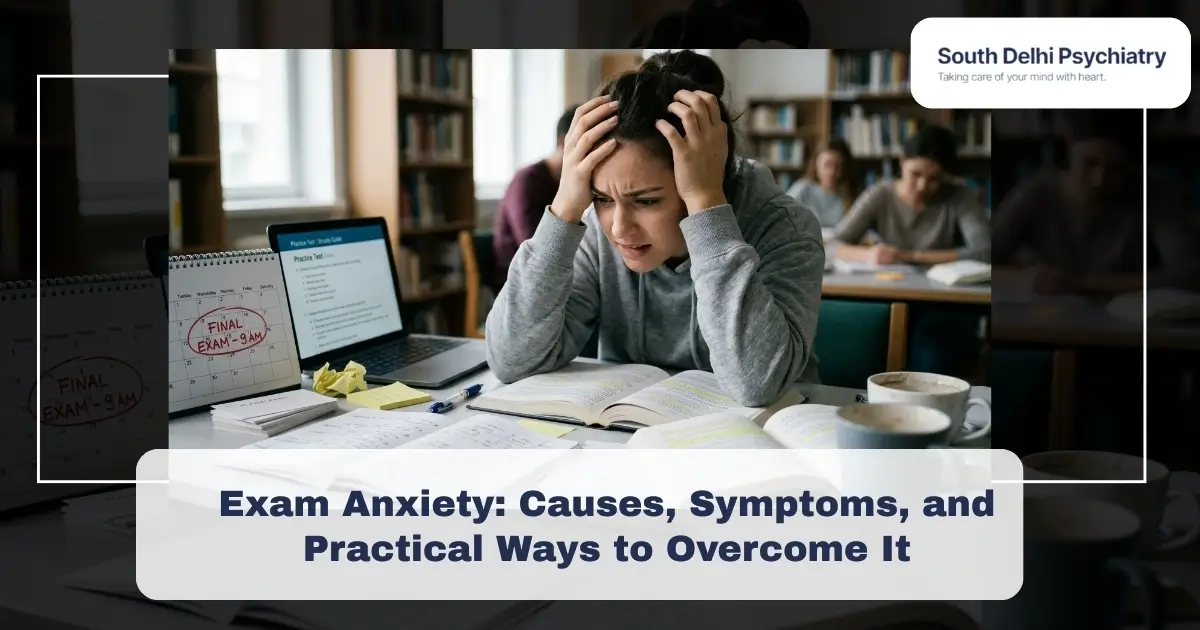
Exams are meant to measure learning, but for many students they have become a source of intense fear and stress. A little nervousness before the test is normal – it can even improve performance. But when worry becomes overwhelming, it turns into exam anxiety.
Exam anxiety affects students across school, college, and competitive exams. It can interfere with concentration, memory, sleep, and confidence. The good news? It is completely manageable with the right strategies.
Let’s understand what exam anxiety really is and how to deal with it effectively.
What Is Exam Anxiety?
Exam anxiety is a type of performance anxiety that occurs before or during exams. It involves excessive worry about results, fear of failure, negative self-talk, and physical stress responses.
It is not about intelligence. Even high-performing students experience exam anxiety. Often, it affects those who care deeply about doing well.
Causes of Exam Anxiety
Exam anxiety does not happen randomly. It usually develops due to a combination of psychological and situational factors.
1. Fear of Failure
Students may link their self-worth to marks. Thoughts like “If I fail, I am useless” create extreme pressure.
2. High Expectations
Pressure from family, teachers, or even self-imposed expectations can increase anxiety.
3. Poor Preparation or Time Management
Last-minute studying often leads to panic.
4. Perfectionism
Students who believe they must perform perfectly are more vulnerable to anxiety.
5. Past Negative Experiences
Previous poor results or embarrassing exam moments can trigger fear in future exams.
Symptoms of Exam Anxiety
Exam anxiety affects both the mind and body.
Emotional Symptoms
- Excessive worry
- Irritability
- Feeling overwhelmed
- Crying spells
Cognitive Symptoms
- Blank mind during exams
- Difficulty concentrating
- Negative thoughts (“I will fail”)
- Overthinking small mistakes
Physical Symptoms
- Sweaty palms
- Rapid heartbeat
- Nausea
- Headaches
- Trouble sleeping
If these symptoms interfere with daily functioning, it may require professional support.
The Psychology Behind Exam Anxiety
When you perceive an exam as a threat, your brain activates the fight-or-flight response. Stress hormones like cortisol and adrenaline increase. While mild arousal improves alertness, excessive stress impairs memory retrieval — which is why students often “blank out” despite knowing the material.
Understanding this is powerful. The problem is not lack of knowledge. It is the body’s stress system going into overdrive.
How to Overcome Exam Anxiety
Here are practical, evidence-based strategies that actually work.
1. Start Early and Study Smart
Create a realistic study schedule. Break subjects into smaller sections. Use active recall and spaced repetition instead of passive reading.
Preparation reduces uncertainty — and uncertainty fuels anxiety.
2. Practice Relaxation Techniques
Deep breathing helps calm the nervous system.
Try this:
- Inhale for 4 seconds
- Hold for 4 seconds
- Exhale for 6 seconds
Repeat for 2–3 minutes before studying or entering the exam hall.
Progressive muscle relaxation and mindfulness meditation are also effective.
3. Challenge Negative Thoughts
Replace catastrophic thinking.
Instead of:
“I will fail and ruin my life.”
Try:
“This exam is important, but it does not define my entire future.”
Cognitive restructuring is one of the most powerful tools in managing exam anxiety.
4. Simulate Exam Conditions
Practice writing answers within time limits. Solve previous year question papers. Familiarity reduces fear.
The brain fears the unknown. Make the exam predictable.
5. Maintain Physical Health
- Sleep 7–8 hours
- Avoid excessive caffeine
- Eat balanced meals
- Exercise regularly
A healthy body supports a calm mind.
6. Avoid Comparison
Comparing preparation levels with classmates increases anxiety. Focus on your own progress.
Your competition is your past self.
7. Seek Support When Needed
If exam anxiety causes panic attacks, severe insomnia, or persistent distress, consider speaking to a counsellor or psychologist. Cognitive Behavioural Therapy (CBT) is highly effective for performance anxiety.
When Exam Anxiety Becomes Severe
If anxiety leads to:
- Frequent panic attacks
- Avoidance of exams
- Physical illness before tests
- Persistent low mood
It may indicate an anxiety disorder that requires professional intervention.
Seeking help is not weakness — it is emotional strength.
Final Thoughts
Exam anxiety is not a sign of incompetence. It is a sign that you care.
With proper preparation, healthy thinking patterns, and relaxation techniques, exam anxiety can be reduced significantly. Remember, one exam does not determine your intelligence, worth, or entire future.
You are more than your marks.
Good luck! You’ve got this.